

I have spent years working with electric unicycles, testing new platforms and helping riders choose machines that match the way they actually ride. One lesson comes up repeatedly: specifications rarely tell you which wheel is better.
The KingSong F18 and LeaperKim Lynx S prove that point perfectly. They have similar voltage, battery capacity and weight, but they feel—and are built—like two very different machines.
My conclusion is clear: the Lynx S is the better all-round electric unicycle and the one I would choose for myself. It is more powerful, more stable, better finished and easier to trust at speed.
However, the F18 wins in two important areas: technical off-road suspension and value. For the right rider, those advantages can matter more than the overall verdict.
The short answer
- Acceleration and torque: Lynx S
- Braking and high-speed control: Lynx S
- Road stability: Lynx S
- Low-speed agility: F18
- Technical off-road suspension: F18
- Build quality and long-term confidence: Lynx S
- Maintenance access and software features: F18
- Pad ergonomics and out-of-the-box integration: Lynx S
- Real-world range: Lynx S, but by a smaller margin than the performance difference
- Value: F18
- Overall winner: LeaperKim Lynx S
Power: the Lynx S is clearly stronger
This is the first area where I disagree with anyone comparing only the motor labels.
The F18 carries the larger nominal watt figure, but the Lynx S has the wider C42 motor and delivers noticeably more force when the rider asks for hard acceleration. The difference is not theoretical. In direct comparisons, the Lynx S is the more aggressive wheel, with stronger torque reserve and a much harder initial response.
The F18 is not slow. On its own, it feels powerful and capable. Riding it after the Lynx S, however, makes it feel softer and more controlled rather than explosive. One rider described the F18 as “sluggish” beside the Lynx S and the Lynx S as much more violent under acceleration. That description is blunt, but it matches the character difference well.
The same advantage carries into braking. The Lynx S gives me more confidence when speed is high and I need immediate deceleration. The F18 brakes adequately, but the Lynx S feels as if it has more reserve at both ends of the performance envelope.
The strongest owner evidence I found comes from a rider who explicitly owns both models: “I own both, and I only ride the Lynx S—it’s superior to the F18.” That owner gives the F18 the suspension advantage, but says the Lynx S wins for braking and responsiveness. This is much more meaningful to me than comparing the nominal watt numbers.
Winner: Lynx S.
Handling: playful F18 or planted Lynx S
The F18 feels lighter on its feet than its actual weight suggests. Its higher pedal position gives it excellent clearance, and it responds quickly when changing direction at lower speeds. On narrow trails, around rocks and in situations where I want to move the wheel underneath me, the F18 is the more playful machine.
That same high position has a trade-off. Some riders experience the F18 as top-heavy, especially before the pads, pedal height and suspension are properly adjusted. It rewards setup and an active riding style.
The Lynx S requires slightly more deliberate input, but I would not call it clumsy. Once moving, it becomes exceptionally composed. It tracks through traffic and faster corners like a rail and hides speed extremely well. That makes it easier to trust, but riders must remain disciplined because the wheel can make 50–60 km/h feel much slower than it is.
For technical low-speed riding, I prefer the F18. For road use, mixed routes and sustained speed, the Lynx S is in another class.
Low-speed and technical winner: F18. Road and high-speed winner: Lynx S.
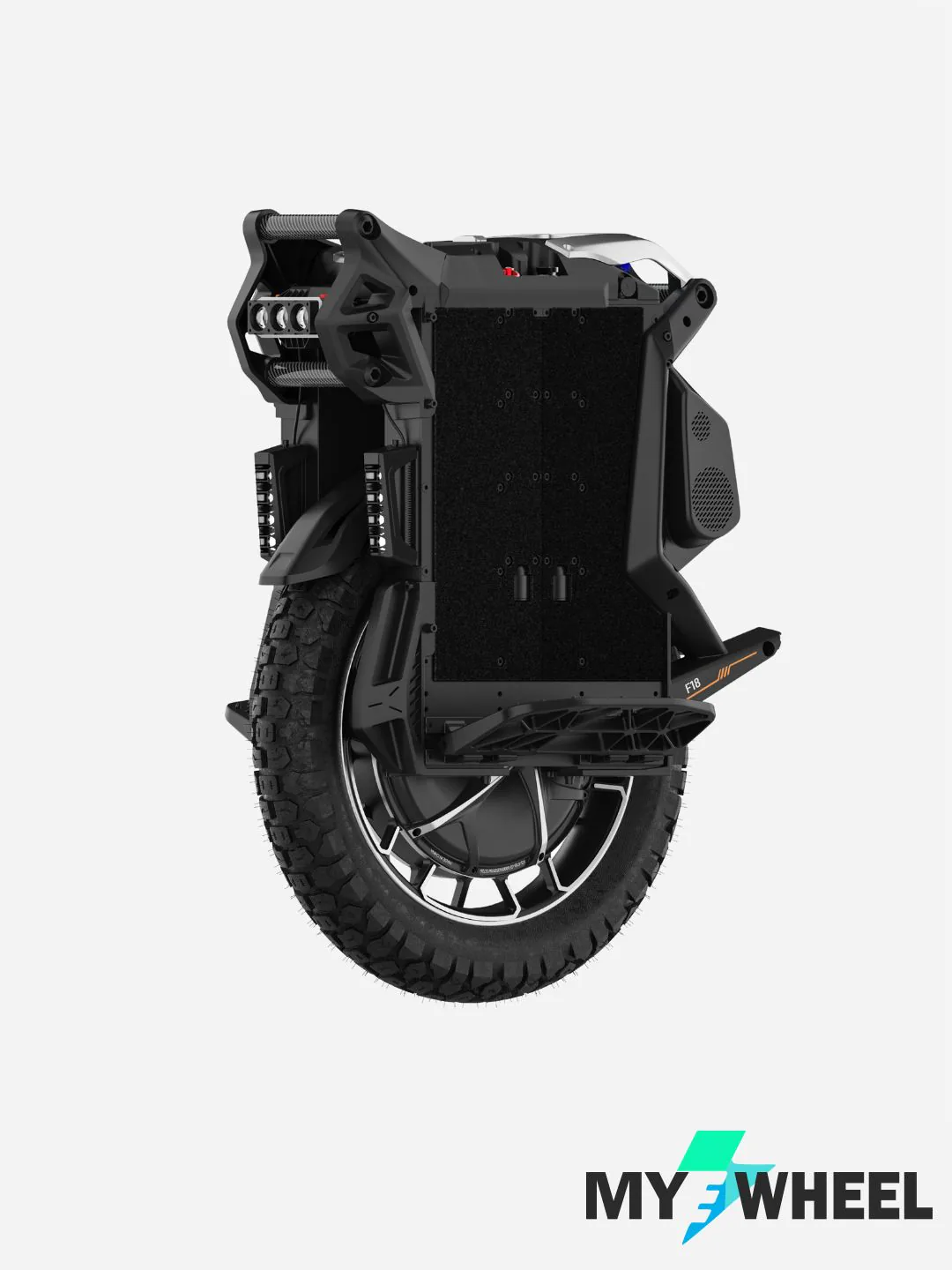
Suspension: the F18’s strongest argument
The F18 suspension is the main reason I would recommend it over the Lynx S to a dedicated off-road rider.
Its 100mm four-point system combines air adjustment with coil support. Properly set up, it provides a plush initial stroke, useful pop for jumps and strong resistance to bottoming. An F18 owner who rides approximately 95% off-road chose it specifically because it was lighter, more manoeuvrable and less likely to bottom out. Other owners describe the same combination: the air section gives the wheel energy, while the coil side keeps the landing controlled.
It is not a suspension for riders who want to set one pressure and forget about it. Sag, spring balance and paired adjustments matter. A badly adjusted F18 can feel tall and awkward; a properly adjusted one is one of the best technical-trail setups in this class.
The Lynx S suspension is smoother as one integrated road-and-trail system. It feels refined over repeated bumps and keeps the chassis calm at speed. For aggressive jumps or riders who repeatedly use the full travel, however, the F18 has the stronger bottom-out resistance in standard configuration.
Technical off-road winner: F18. Fast mixed-surface winner: Lynx S.
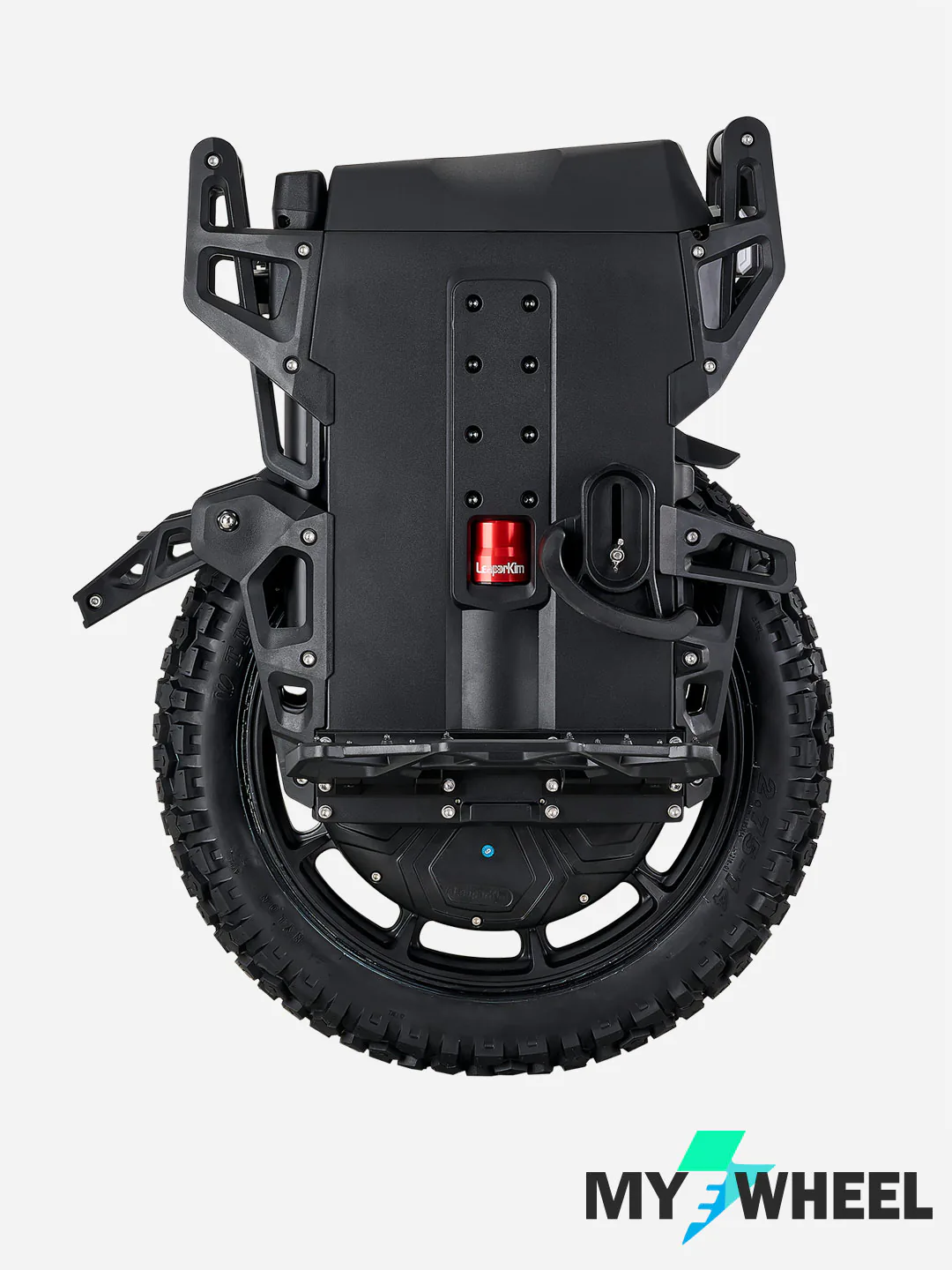
Build quality: the Lynx S earns its premium position
This is the category where the difference is most obvious when I look beyond features.
The Lynx S has a stronger integrated structure, cleaner battery enclosure and fewer exposed or vulnerable components. Its design gives me more confidence that the wheel can absorb regular use, falls and difficult weather without turning every incident into a repair project.
The F18 is clever but busier. It has more plastic around the body, external lighting elements and a rear speaker/stand section that limits the flat area available for aftermarket pads. Several riders have highlighted this exact problem. Even owners who like the wheel often ask whether later batches have changed the rear ridge because it restricts pad placement.
KingSong deserves credit for making the F18 easy to work on. Motor removal can be completed very quickly, and the modular design is excellent for tyre changes and servicing. But serviceability and structural confidence are not the same thing.
If I am judging how quickly I can access the motor, the F18 wins. If I am judging which complete machine I trust more over years of demanding use, the Lynx S wins clearly.
Build-quality winner: Lynx S. Serviceability winner: F18.
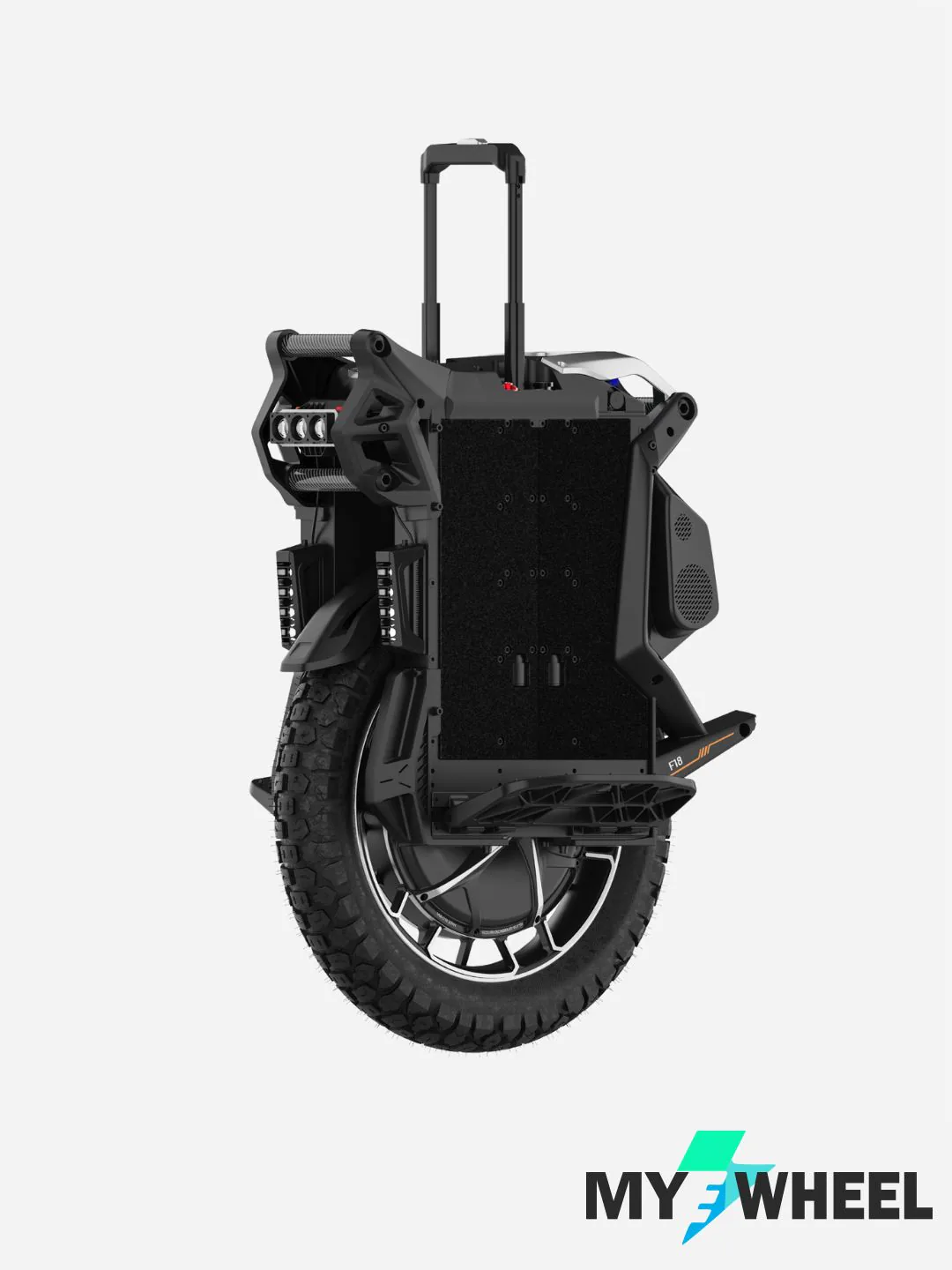
Features and everyday usability
The F18 offers more equipment for the money: a better app experience, extensive ride adjustment, speakers, Apple Find My support, OTA updates and a powerful stock charging package. Riders who enjoy configuring their wheel will get much more to explore.
The Lynx S is intentionally simpler. It does not try to win with speakers or a long feature list. Instead, its adjustable pedals, usable factory pads and uncluttered side panels work better as a complete riding package.
This is also where the F18’s feature-heavy body becomes a disadvantage. The rear speaker and stand arrangement interfere with pad freedom, while the Lynx S gives the rider a more conventional surface for adjustment or aftermarket pads.
Software and features winner: F18. Ergonomics and pad integration winner: Lynx S.
Range: Similar Batteries, but a Practical Edge to the Lynx S
The battery difference is too small to decide this comparison. Riding speed, temperature, hills, tyre pressure and rider weight have far more influence than the small capacity gap between the two packs.
There is a dedicated real-world range comparison between these models, and the rider who publicly confirmed owning both also prefers the Lynx S for range. I therefore give the Lynx S the practical advantage, but not by enough to make range the main reason for choosing it. Both remain in the same general battery and range class, and riding style can easily outweigh the difference.
Winner: Lynx S, by a modest margin.
What owners are actually choosing
The most useful community discussions are not spec debates; they are comments from riders who have owned or seriously considered both.
The clearest direct ownership verdict favours the Lynx S. One rider who owns both says the Lynx S is superior overall and is the only one of the two they now ride. Importantly, that same owner still gives the suspension win to the F18, while choosing the Lynx S for range, braking and responsiveness. A moderator in the same broader EUC group also called the Lynx S the superior wheel because of its build quality, speed, adaptability and mature platform.
The F18 still has a very clear audience. An owner who rides approximately 95% off-road chose it for its manoeuvrability, lower-feeling mass and resistance to suspension bottoming, without needing the Lynx S speed. Another discussion describes a Lynx S rider trying the F18 after months of failing to find a satisfactory Lynx S suspension setup—the trade-off was described very simply as Lynx S power versus F18 suspension.
In a separate Facebook comparison about safety and rebuilding trust after a cut-out, the most supported answer was equally direct: if reliability and safety are the priorities, choose LeaperKim. Owners repeatedly describe the Lynx S as the more future-proof, low-maintenance all-round machine. The counterargument is consistent too: choose the F18 for suspension, fun, easy motor access, app adjustment and value.
That split matches my own conclusion. The F18 attracts riders who want fun, adjustment and suspension performance. The Lynx S attracts riders who want to buy one serious wheel and trust it across almost every use case.
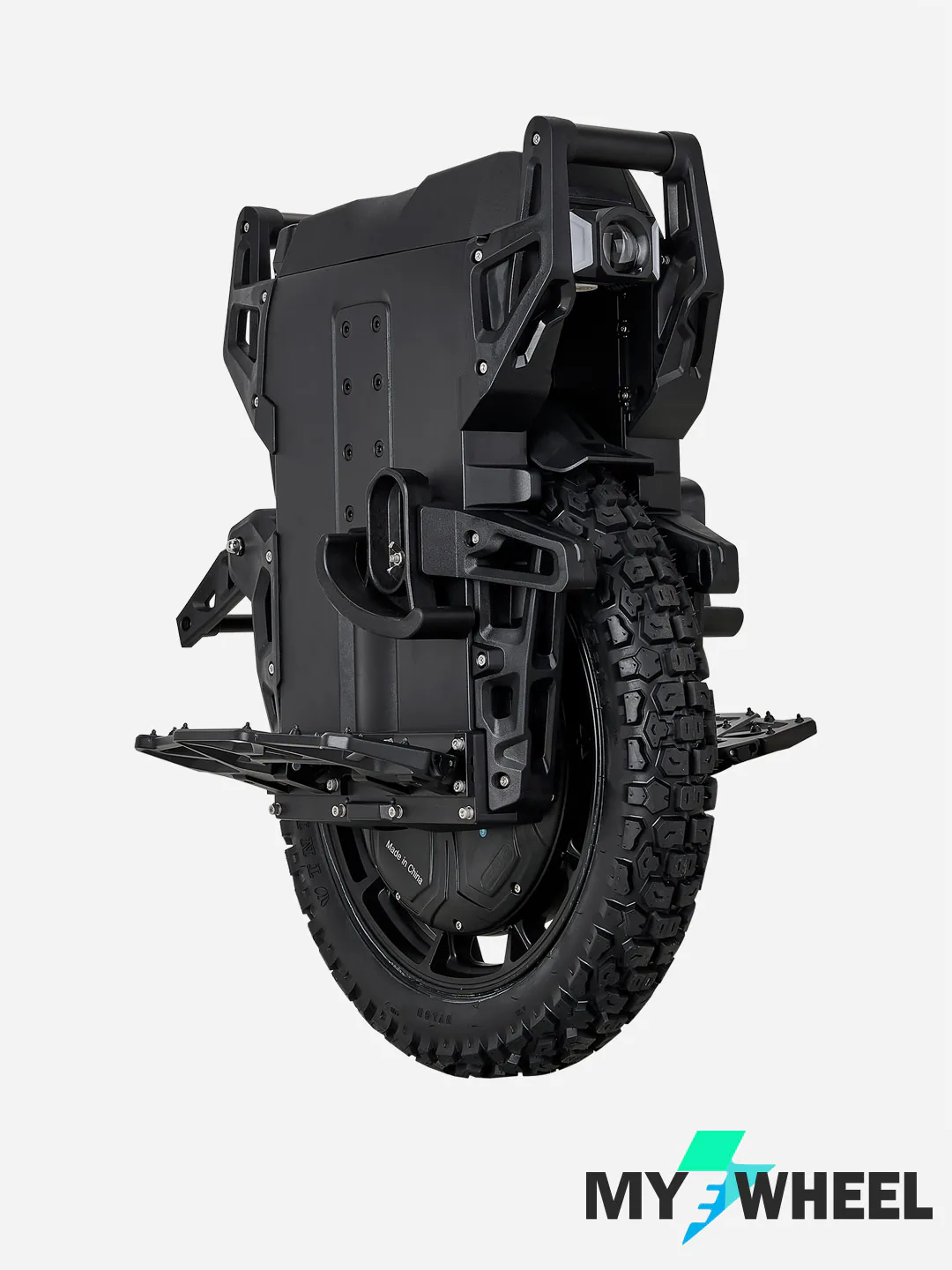
My final verdict
If both wheels were in front of me and I had to keep only one, I would take the LeaperKim Lynx S.
It wins the categories that matter most to me in a premium performance EUC: acceleration, braking confidence, high-speed stability, construction quality, ergonomics and long-term trust. It feels like the more complete and mature machine.
I would choose the KingSong F18 instead only in two situations:
- Most of my riding was technical off-road, where its high pedals, agility and bottom-out-resistant suspension offer a real advantage.
- The price difference was large enough that the F18’s feature package and easier servicing offered substantially better value.
For the majority of experienced riders looking for one wheel for fast road use, touring and mixed trails, the Lynx S is the better choice and the overall winner.
For a rider who values playful handling, technical trails and suspension performance above high-speed power and premium construction, the F18 is the more specialised—and potentially more enjoyable—choice.
Comments
No comments yet. Be the first to say something.
Please sign in to leave a comment.