

Suspension can transform the comfort and control of an electric unicycle — but only when it is adjusted correctly.
Many riders copy an air-pressure recommendation, add spring preload until the wheel feels firm, or use the settings from a reviewer with a completely different weight and riding style.
The adjustment most often overlooked is sag.
Sag is the amount of suspension travel used when the fully equipped rider stands normally on the wheel. Air pressure and spring preload are simply tools used to achieve the correct sag.
Why Sag Matters
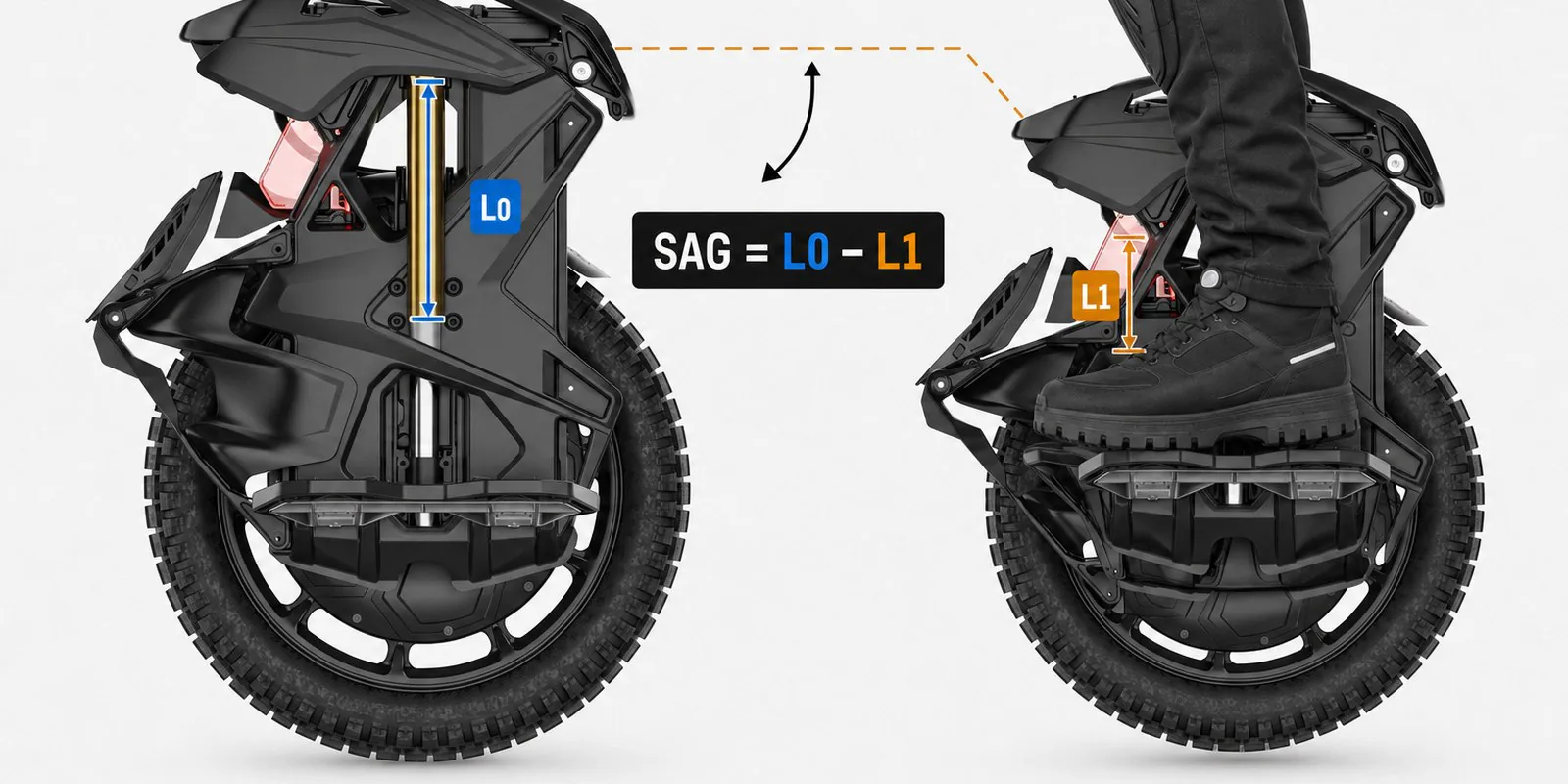
Suspension needs space to move in both directions. It compresses when the wheel hits an obstacle and extends when the surface drops away.
Too little sag
If the suspension sits too high:
- Small bumps can feel harsh
- The tyre may lose contact with uneven terrain
- The wheel can feel nervous
- The suspension may top out
Too much sag
If it sits too low:
- The suspension can bottom out
- Pedal clearance is reduced
- Less compression travel remains
- The wheel may feel unstable during larger impacts
There is no universal sag percentage for every EUC. Follow the manufacturer’s guidance and treat general recommendations only as a starting point.
How to Measure Sag
Wear your normal riding equipment, including helmet, protection and backpack.
- Check the tyre pressure.
- Fully extend the suspension.
- Place an O-ring, cable tie or removable marker on the suspension shaft.
- Step onto the wheel with another person keeping you stable.
- Stand in your normal riding position without bouncing.
- Step off carefully and measure how far the marker moved.
Calculate the result using:
Sag percentage = sag movement ÷ total suspension travel × 100
Always use the manufacturer’s stated usable suspension travel. The visible length of a slider is not necessarily the actual travel.
Setting Air Suspension
Use a proper high-pressure shock pump — not a tyre pump or compressor.
- If sag is excessive, add air gradually.
- If sag is insufficient, release a small amount of air.
- Cycle the suspension after every change if required by the manufacturer.
- Measure the sag again with all your riding equipment.
Do not focus only on the pressure shown on the pump. The correct pressure is the one that produces suitable sag for the rider and wheel. Never exceed the manufacturer’s maximum pressure.
Setting Coil Suspension
With coil suspension, the spring rate supports the rider while preload provides limited adjustment. The important rule is:
Preload cannot compensate for the wrong spring rate.
If the spring is too soft, excessive preload can make the initial movement harsh while the suspension still bottoms out on larger impacts. If it is too firm, reducing preload may not provide sufficient sag.
Start with the correct spring for your equipped rider weight. Add preload gradually and remain within the manufacturer’s permitted range.
Adjusting Rebound
Rebound controls how quickly the suspension returns after compression.
Rebound too fast
The wheel may bounce, feel nervous or push the rider upward after an impact.
Rebound too slow
The suspension may remain compressed and “pack down” over repeated bumps, leaving less travel available.
Start from the manufacturer’s recommendation or a neutral middle position. Adjust one or two clicks at a time and test the result at a safe speed.
Change Only One Setting at a Time
Do not change air pressure, rebound and tyre pressure simultaneously. You will not know which adjustment improved — or damaged — the ride.
Use this process:
- Record the original settings.
- Set and measure sag.
- Test the wheel.
- Adjust rebound.
- Test again.
- Adjust compression damping if available.
- Change tyre pressure separately.
Use the same short test route and keep notes after every adjustment.
Quick Suspension Checklist
Before riding:
- Consult the manual
- Check the maximum permitted pressure
- Wear your normal equipment
- Verify tyre pressure
- Measure sag
- Adjust pressure or preload
- Set rebound
- Record the settings
- Check for leaks, damage or play
- Test at low speed
Final Thoughts
The pressure on the pump gauge is not the final suspension setting. Neither is the number of preload turns. The starting point is the position of the suspension with the fully equipped rider standing naturally on the wheel.
Set the sag first, then fine-tune rebound and compression damping. A few careful measurements can make the same EUC feel more comfortable, controlled and predictable.
Need help with your suspension?
Browse suspension electric unicycles, find shocks and seals in spare parts, or contact the MyEWheel workshop — we will set the sag for your weight and riding style.

Comments
No comments yet. Be the first to say something.
Please sign in to leave a comment.